Queer Grace in Chalk
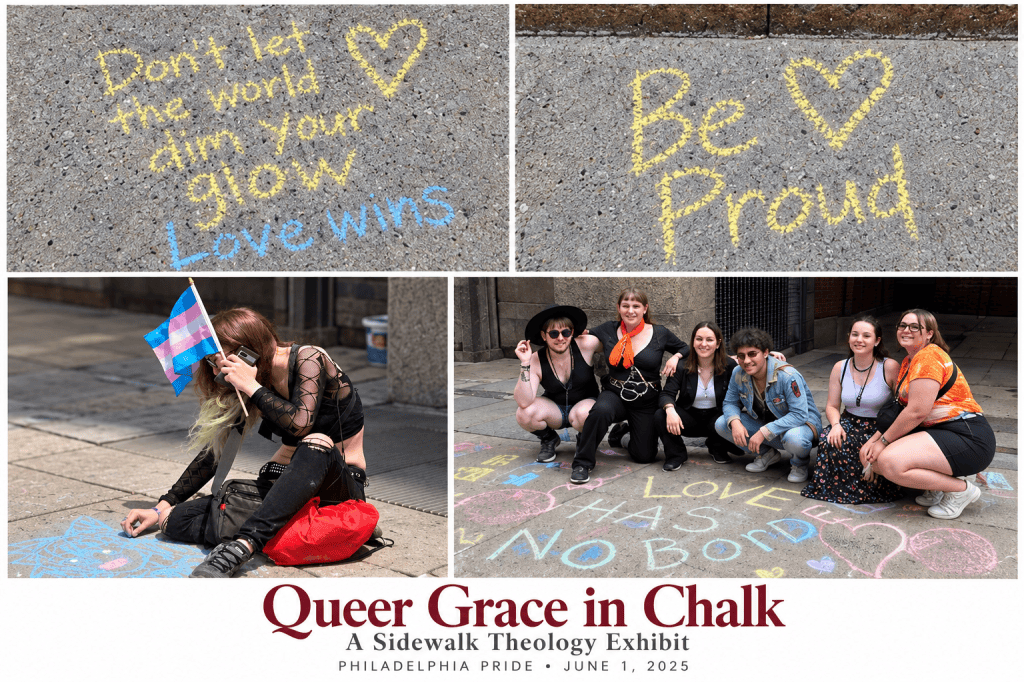
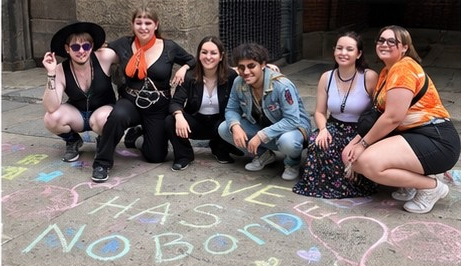
Love Has No Bounds: A group poses beside sidewalk artwork bearing the message, “Love has no bounds.” 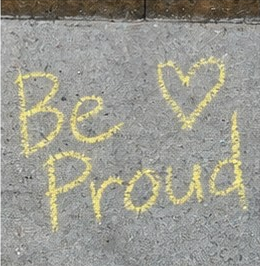
Be Proud A chalk message reading “Be Proud” appears beside a heart. 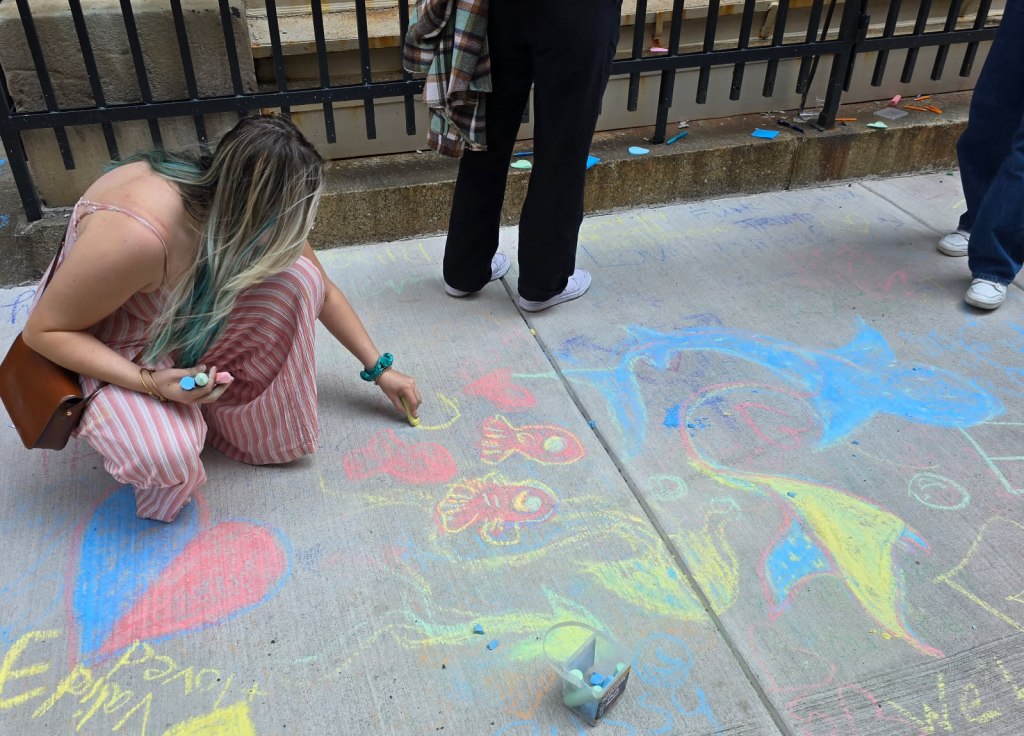
Creating a Sidewalk Drawing: A participant adds chalk marks to a colorful sidewalk drawing. 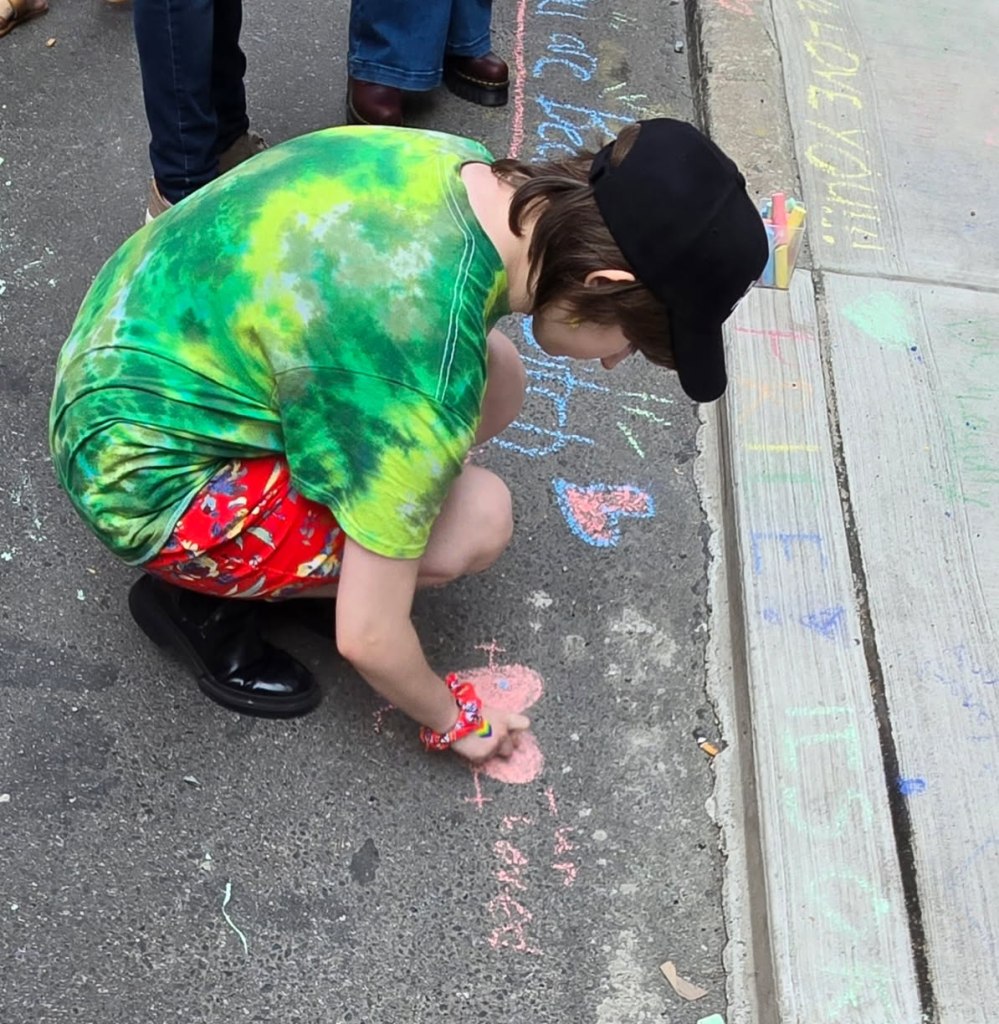
Adding a Chalk Message: A participant writes and draws along the sidewalk edge. 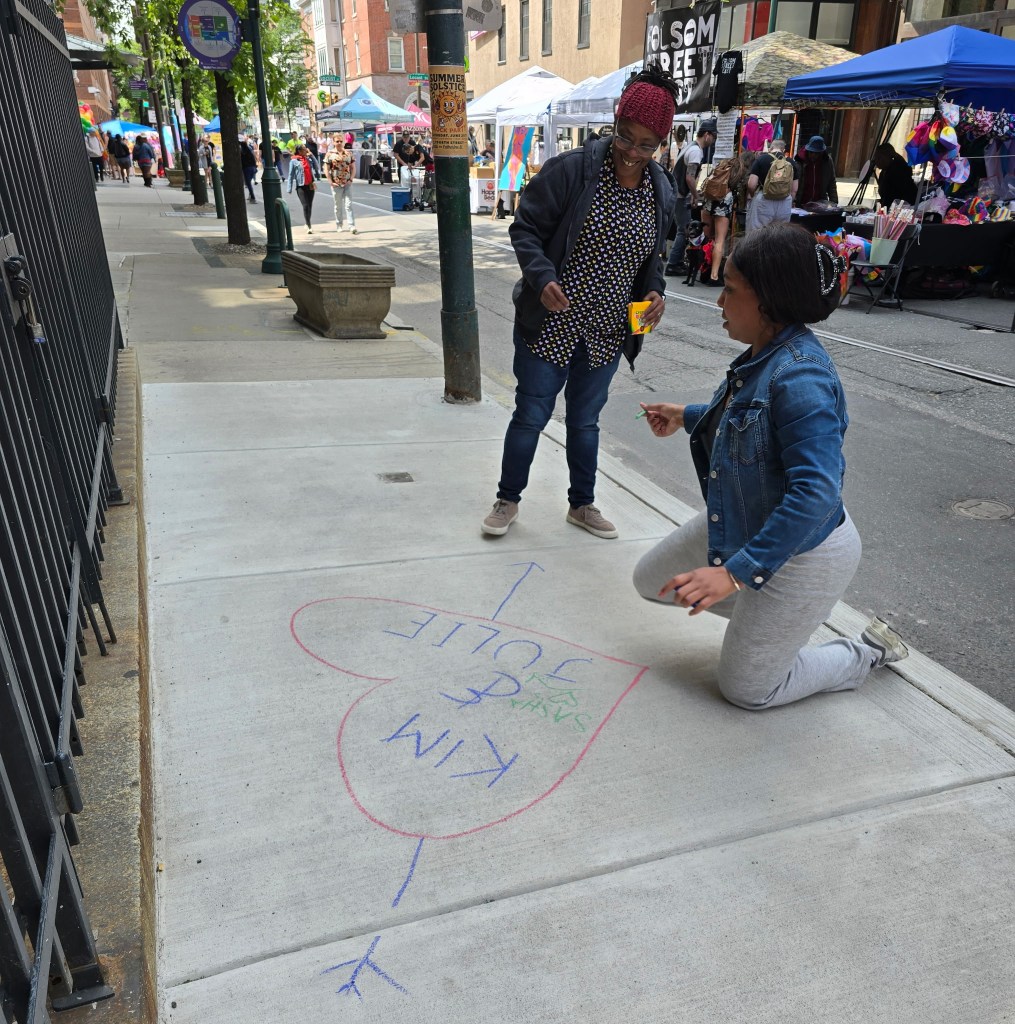
Be Your Gorgeous Self: Participants gather around a chalk message celebrating self-expression. 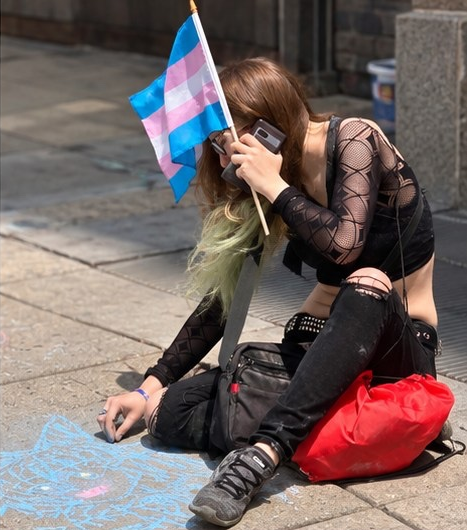
Chalk Expression Beside a Transgender Pride Flag: A participant draws on the sidewalk while holding a transgender Pride flag. 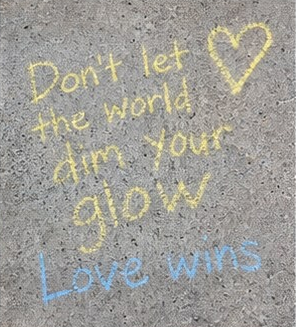
Love Wins: A sidewalk chalk message reads, “Don’t let the world dim your glow” and “Love wins.” 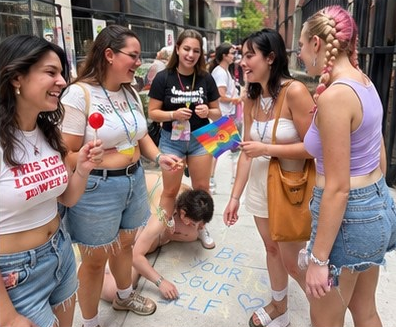
Conversation Beside the Chalk Exhibit: Participants engage in conversation beside the sidewalk artwork.
Event
Philadelphia Pride, June 2025
Introduction
Queer Grace in Chalk: A Sidewalk Theology Exhibit invited participants at Philadelphia Pride in June 2025 to contribute drawings, words, and messages to a shared sidewalk space. With chalk available for public use, visitors could express encouragement, celebrate identity, or add something meaningful to the evolving exhibit.
The sidewalk became a space for creative expression and connection. Messages such as “Be Proud,” “Love wins,” and “Love has no bounds” appeared alongside drawings and personal contributions. People could pause to create, notice what others had shared, or enter into conversation. Participation remained open, allowing visitors to choose how they wanted to engage.
Theological reflection
Queer Grace in Chalk offers a way to consider public theology through ordinary materials and shared public space. A sidewalk is a place people move through, often without stopping. Through the exhibit, it also became a place where people could express themselves and encounter messages of recognition and belonging.
Read theologically, the chalk messages invite reflection on grace as something communicated through our treatment of one another. Words of encouragement and invitations to be oneself raise a question for Christian public witness: How might our presence help create an environment where people’s dignity is recognized and their voices have room to be heard?
For LGBTQIA+ people who have encountered religious rejection or shame, public expressions of welcome can carry particular significance. The exhibit offered space for expression without requiring participants to explain their identities or defend their worth. Its theological meaning emerges through reflection on that practice: making room for people to participate as they are.
The shared artwork also placed creative agency in participants’ hands. Their contributions shaped the exhibit rather than merely responding to a finished message. In a healing-centered public theology, this invites attention to whose voices shape public space and how participation can express mutual recognition.
Chalk is temporary. Its marks may fade, wash away, or be replaced, yet their temporary character invites reflection on the value of presence in a particular moment. Public witness can take place through a brief encounter, a shared activity, or words offered where someone may need to see them.
The photographs document participation rather than establish evidence of healing or changes in mental health. The exhibit’s theological significance lies in the questions it opens about creative expression, dignity, agency, and the ways care can become visible in public life.
Credit
Kimberly Tribbett: Data curation, Conceptualization, Project administration, Visualization
Carla Christopher: Photography & Conceptualization
Camille Tribbett: Conceptualization

